POSITION GUIDE
July 2010
SAN MIGUEL SCHOOLS Chicago
Back of Yards Campus / Gary Comer Campus
Position: Vice President for Institutional Advancement
Reports to: President & Executive Director
Start date: Summer, 2010
About San Miguel Schools
Founded in Chicago in 1995 by the De La Salle Christian Brothers, San Miguel Schools’ mission is to work in the transformation of two of Chicago’s most challenged communities: Austin, on the city’s west side and Back of the Yards, on the south side. Two private, non-tuition driven middle schools provide a combination of quality education, a high level of family engagement, and support through the high school years, to empower children and families so they may become active, contributing and competitive members of the global community. Please visit www.sanmiguelchicago.org for more information on the Schools’ mission and achievements.
Position Summary
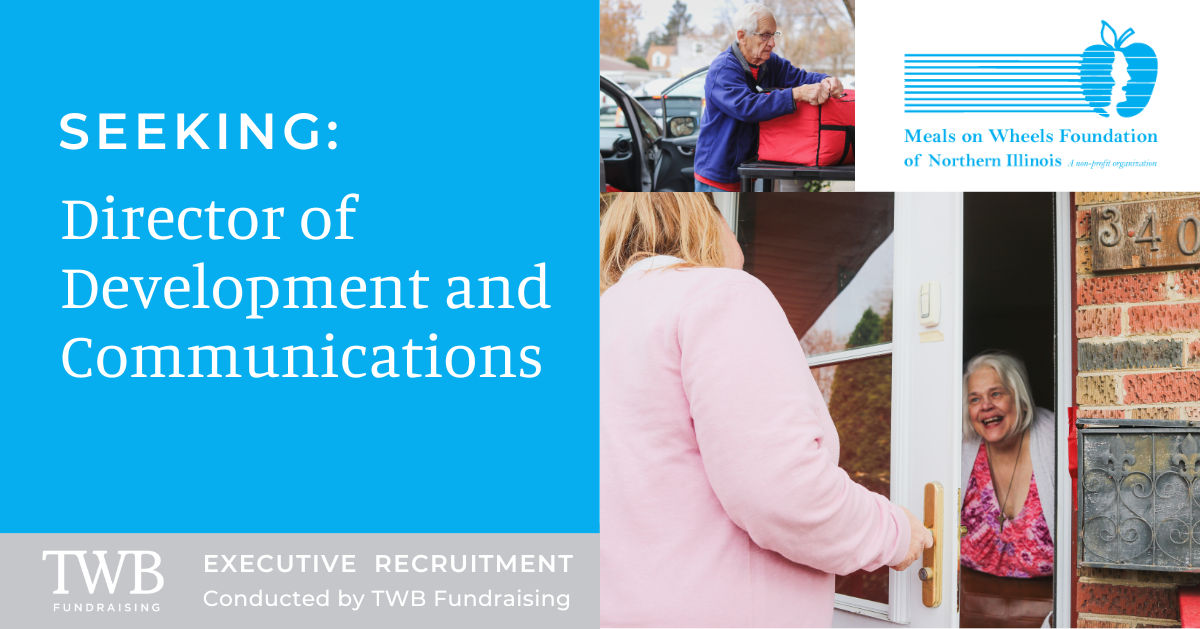
The Vice President for Institutional Advancement is a highly visible position at San Miguel Schools (SMS). Working with the President & Executive Director and the Board of Directors, the position serves as the chief advancement officer for SMS. The Vice President provides leadership, direction and coordination for all San Miguel fundraising and public relations activities, including major and planned giving, annual giving, foundation and corporate support, and special events. The position is responsible for raising funds for the annual operating budget, scholarships, and capital and endowment projects. Key priorities include strengthening the fundraising function, increasing the size of the major gift prospect pool and helping to build board and volunteer leadership. The Vice President serves as a vital member of the San Miguel leadership team. Read FULL DESCRIPTION
15 New Annual Fellows Celebrate Graduation
The 16th class of Annual Fellows completed their program on June 10th. The program, part of the Leadership Development Consortium and led by Nora Kyger, Senior Vice President of TW&B, introduces new development professionals to leaders in Chicago philanthropy and helps them establish an inter-organizational peer group. The 2010-2011 program is already filled, but applications are being accepted for the 2011-2012 program."
Over the course of the year, Fellows met monthly with various leaders in their field – foundation and corporate giving officers and board members, senior development professionals, a consultant, and even the president of a university to hear about their career paths, their daily lives, and to ask and answer questions.
Congratulations to the graduates! Maryam Arai, Dylan Commeret, Theresa Ebenhoeh, Julie Hasel, Valery Krieg, Kindy Kruller, Stephanie Oberhausen, Lisa Pagniucci, Michelle Scott, Steven Solomon, Carlos Terrazas, Jesse Trevino, Kelly Wagner, Beth Wittbrodt, and Kelly Ferdinand Zimmerman.
And a very special thanks to our knowledgeable and supportive speakers: Jill Selzer, WBEZ; Jennifer Rosenkranz, Michael Reese Health Trust; Clyde Watkins, Ter Molen Watkins & Brandt; Lloyd A.“Chip” Fry, Lloyd A. Fry Foundation; Nikki Will Stein, Polk Bros. Foundation; Alice Sabl, Philanthropist, volunteer; Susan Himmelfarb, Himmelfarb Group; Judith Stockdale, Donnelley Foundation; Mary Surridge and David Parkyn, North Park University.
Fundraising Tip
Donor-Advised Funds and the Satisfaction of Pledges
When a donor contributes to a donor-advised fund, that contribution becomes immediately deductible even though no charity has received a contribution. If the contribution is in the form of appreciated assets, the donor also avoids capital gains taxes. Note that this same tax benefit is available to donors who do not liquidate the assets before gifting them, but rather allow the tax-exempt charity itself to sell the asset.)
As the name indicates, a donor can advise on the ultimate disposition of the contribution, but cannot actually control it. In practice, however, these funds will much more than likely accede to the donor’s wishes and direct the ultimate contribution to the chosen charity.
The Internal Revenue Service and a number of state courts have taken the position that contributions from a donor-advised fund cannot be used to satisfy personal pledges to public charities. Doing so can be considered conferring a financial benefit on the individual (i.e. the favorable capital gains tax treatment) and could subject the donor and the institution to penalties, up to and including revocation of tax-exempt status. Unfortunately, it is not clear that proprietors of donor-advised funds are adequately alerting clients of this restriction.
So remember, “current tax regulations prohibit the use of distributions from donor-advised funds to satisfy outstanding personal pledges.” More FUNDRAISING TIPS